



Compression lows are one of the most common frustrations discussed by CGM users. They can trigger false alarms, interrupt sleep and leave people wondering whether their blood sugar is genuinely low or whether the sensor is being affected by something else entirely.
Across diabetes forums, social media groups and Reddit communities, the same story appears repeatedly.
A CGM alarm sounds in the middle of the night. The sensor reports a low glucose reading, sometimes dropping rapidly over a short period. A finger-prick test then shows blood sugar levels are nowhere near as low as the CGM suggests.
In one discussion on Diabetes.co.uk, a Libre user reported overnight sensor readings in the low 3 mmol/L range while blood glucose tests showed readings closer to 5.5 mmol/L. Other forum members quickly suggested compression lows as a possible explanation.
Similar conversations can be found on Diabetes UK's forum, where users regularly discuss overnight lows that disappear shortly after changing sleeping position.
For many people, the first time it happens can be worrying.
The good news is that a compression low is usually not a genuine hypo. Understanding why they happen can make overnight CGM readings much easier to interpret.
What is a compression low?
A compression low happens when pressure is applied to a CGM sensor, causing readings to appear lower than they really are.
The most common cause is sleeping directly on the sensor. When this happens, pressure can temporarily affect the interstitial fluid around the sensor filament. Because CGMs measure glucose in this fluid rather than directly from blood, readings can sometimes be influenced by the change.
The result is a glucose graph that may suggest a low is happening even though blood sugar levels have remained relatively stable.
For many people, the first sign is an overnight alarm.
Why do compression lows happen overnight?
Most compression lows happen while sleeping simply because people remain in the same position for much longer than they would during the day.
A sensor worn on the upper arm can end up trapped between the mattress and the body for several minutes or even hours. Side sleepers often report experiencing compression lows more frequently, particularly if they tend to sleep on the same side as the sensor.
The frustrating part is that many users don't realise they have rolled onto the sensor until after the alarm sounds.
As one Diabetes UK forum member noted, they only realised compression was the cause after noticing their readings returned to normal every time they changed position in bed.
What does a compression low look like?
Although every CGM system is different, compression lows often share several characteristics.
Many users notice:
- A sudden overnight drop in readings
- A graph that falls unusually quickly
- Low glucose alarms during sleep
- Readings recovering rapidly without treatment
- No symptoms of hypoglycaemia
- Finger-prick results that are significantly higher
The speed of the drop is often one of the biggest clues.
Real glucose changes can certainly happen quickly, but compression lows often produce dramatic falls followed by equally dramatic recoveries.
Compression low or genuine hypo?
This is often the biggest concern when a CGM suddenly reports a low reading overnight.
A genuine hypo should always be taken seriously and, if there is any doubt, it is important to follow healthcare guidance. However, there are often clues that can help indicate whether a reading may have been influenced by pressure on the sensor.
A compression low is more likely when:
- The reading drops while sleeping
- You wake up lying on the same side as the sensor
- There are no symptoms of hypoglycaemia
- The reading recovers quickly after changing position
- A blood glucose test shows a significantly higher result
- The glucose graph shows a sudden drop followed by a rapid recovery
A genuine hypo is more likely when:
- Symptoms match what the CGM is reporting
- A blood glucose test confirms the low reading
- Glucose levels remain low without treatment
- There is a clear explanation, such as recent exercise, insulin dosing or illness
- The drop follows a more gradual pattern rather than a sudden overnight dip
For many experienced CGM users, the shape of the graph often provides an important clue. Compression lows frequently appear as a sharp overnight fall that corrects itself quickly once pressure on the sensor is removed.
If there is any uncertainty, a blood glucose test can help provide additional reassurance and context.
What CGM users say about compression lows
Spend a few minutes browsing diabetes forums and it quickly becomes clear how common compression lows are.
One of the most frequent complaints isn't the false reading itself. It's the sleep disruption.
Users regularly describe being woken multiple times during the night by alarms, carrying out blood glucose checks and then discovering they were never actually low. Others say they initially thought they had received a faulty sensor before learning about compression lows from other members of the diabetes community.
A common theme is reassurance. Many people discover they are far from alone once they start searching for answers online.
What can you do to reduce compression lows?
There is no guaranteed way to prevent compression lows completely, but there are several practical steps that many CGM users find helpful.
Pay attention to sensor placement
Small differences in placement can sometimes make a surprisingly large difference. Some users find certain positions on the upper arm are less likely to experience pressure overnight than others.
Consider your sleeping habits
People who consistently sleep on one side may find it helpful to wear the sensor on the opposite arm where possible. While this won't eliminate compression lows entirely, it may reduce the chances of prolonged pressure.
Use additional sensor protection
Many CGM users choose to wear an armband over their sensor while sleeping.
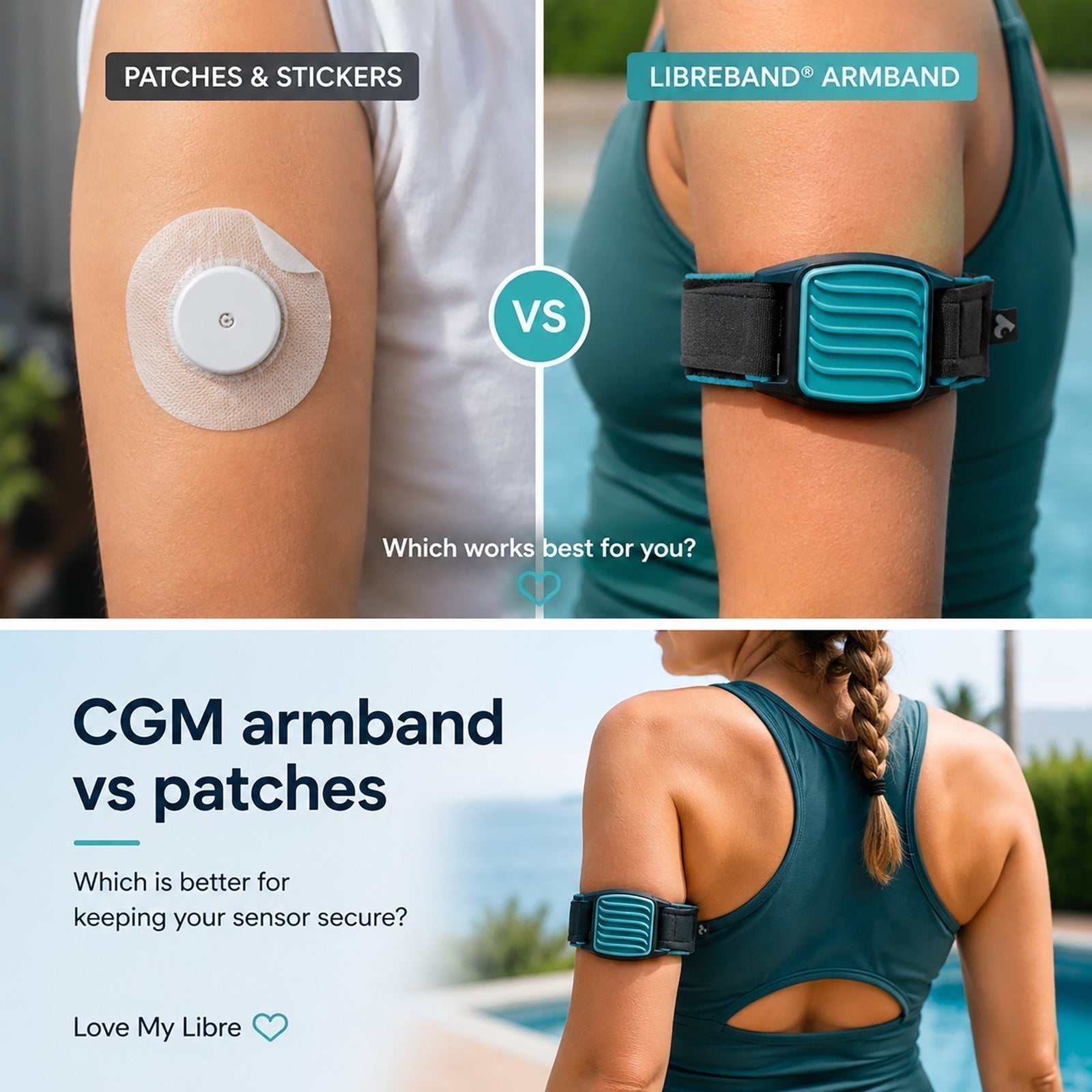
Unlike patches or stickers, which are primarily designed to help keep a sensor attached, a CGM armband includes a protective cover that sits over the sensor itself. Some users find this helps reduce direct pressure on the sensor when lying on their arm.
Products such as Libreband and Dexband use a hard ABS cover combined with a neoprene strap. While they are primarily designed to help protect sensors from knocks and falling off early, many users also report fewer overnight compression lows.
Look for patterns
A single overnight low doesn't necessarily indicate a compression low.
Repeated overnight dips that occur at similar times, particularly if they recover without treatment, often provide a much stronger clue.
Reviewing several days of CGM data can reveal patterns that are easy to miss when looking at a single night's graph.
Confirm unusual readings
If a reading doesn't seem to match how you feel, a blood glucose check can help provide additional context.
Many users find this particularly useful during the first few months of wearing a CGM, while learning to recognise how their sensor behaves.
The bottom line
Compression lows are one of the more frustrating realities of wearing a CGM, but they are also one of the most common.
For many users, understanding what causes them is enough to remove much of the worry. Once the pattern becomes familiar, it becomes easier to recognise the difference between a sensor being affected by pressure and a genuine overnight low.
They may not be completely avoidable, but practical steps such as careful sensor placement, reviewing overnight patterns and reducing pressure on the sensor can often help minimise the problem.
For many CGM users, keeping a sensor on can be as frustrating as wearing one. Compression lows are another reminder that even the most advanced diabetes technology can sometimes be influenced by something as simple as the way a person sleeps.

About the editor
Samantha is editor of Libre Life and founder of Love My Libre. She writes about diabetes medtech, CGM wear, hybrid-closed loop systems and practical real-world device use.



Leave a comment (all fields required). Please note, we are unable to respond to individual comments posted here.